
Industrial Hemp,
Hemp — Five Economies from One Field
The Transformation Catalyst for BioDiversity Arc
Why Hemp: Civilization's Forgotten Infrastructure Plant
For ten thousand years, hemp wove itself through the fabric of human civilization. The sails that carried Columbus across the Atlantic were hemp canvas—the very word 'canvas' derives from 'cannabis.' The ropes that rigged every ship in every navy of every empire were hemp cordage, twisted by generations of ropemakers whose craft cities still bear in their names. The first drafts of the United States Constitution were written on hemp paper. The original Levi Strauss jeans—designed to survive the brutal labor of gold mining—were hemp denim. When Henry Ford built his experimental car with hemp composite body panels in 1941, he wasn't innovating; he was remembering what every farmer's grandmother knew: hemp builds civilizations.
Then came the great forgetting. Twentieth-century drug policy, driven more by industrial competition and racial politics than by science, conflated industrial hemp with its psychoactive cousin. The plant that had clothed armies, rigged navies, and housed families for millennia was criminalized virtually overnight. Farmers who had grown hemp for generations were forced to abandon the crop. The knowledge—of cultivation, of processing, of the ten thousand applications—began to fade. Petroleum-based synthetics filled the void: nylon ropes, polyester fabrics, fiberglass panels, plastic packaging. A civilization built on plants became a civilization dependent on extraction.
That century of prohibition is ending. Nation by nation, parliament by parliament, the legal barriers are falling. And BioDiversity Arc arrives at exactly this moment—not by accident, but by design—to position 500 million smallholder farmers to reclaim hemp's civilizational role. This isn't nostalgia for a pre-industrial past. This is recognition that the future of sustainable agriculture, carbon-negative construction, non-toxic textiles, biodegradable plastics, and farmer prosperity converges in a single plant that happens to be the second-fastest growing crop on Earth after bamboo.
Where Hemp Grows: From Frozen Steppes to Tropical Highlands
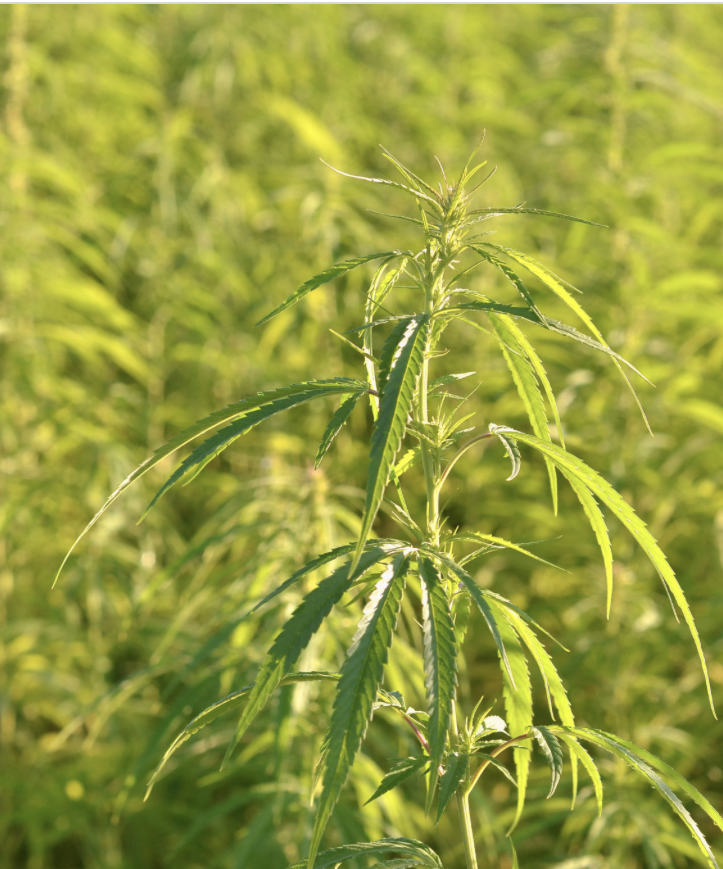
Hemp's extraordinary adaptability explains its historical ubiquity. The plant thrives from the frozen edges of Siberia to the tropical highlands of Kenya, from the monsoon-drenched fields of Bangladesh to the semi-arid savannas of Zimbabwe. It requires no irrigation in most climates—its deep taproot draws moisture from depths that shallow-rooted crops cannot reach. It requires no pesticides—its dense canopy and natural biochemistry suppress weeds and repel insects. It requires no synthetic fertilizers—its leaf litter returns nitrogen to the soil, leaving fields more fertile than it found them. In just 90 to 120 days, hemp grows from seed to harvest-ready biomass, producing 8 to 15 tonnes of dry matter per hectare—a velocity of growth that only bamboo exceeds among commercial crops.
This adaptability matters profoundly for BioDiversity Arc's mission. The 500 million smallholder farmers we serve are not concentrated in optimal agricultural zones with perfect rainfall and rich soils. They farm marginal lands, degraded soils, erratic rainfall patterns. They cannot afford irrigation systems or chemical inputs. They need crops that work with nature rather than against it—crops that regenerate rather than extract. Hemp is precisely such a crop. In Zimbabwe's tobacco-depleted soils, hemp restores organic matter while generating income. In Kenya's coffee highlands, hemp intercropped beneath tree canopy provides additional revenue without competing for sunlight. In India's cooperative farmlands, hemp fiber adds a transformative economy to existing diversified systems.
The geography of hemp liberation is expanding rapidly. Geoff Whaling, who has advised 62 countries on hemp legalization, reports that the regulatory dominoes are falling faster than anyone predicted. Malawi and Zambia have already established frameworks. Zimbabwe is advancing legislation. Kenya is exploring pilot programs. India is revisiting its colonial-era restrictions. The UK's All-Party Parliamentary Group on Industrial Hemp, with Sonia Klein as Secretariat Lead, is creating legislative templates that Commonwealth nations can adapt. Within five years, every major agricultural region served by BioDiversity Arc will have legal pathways for hemp cultivation. The question is no longer whether hemp will return to global agriculture, but who will capture the prosperity it generates—multinational corporations or the farmers who grow it.
What Hemp Produces: 50,000 Applications from One Harvest
The hemp plant is a study in elegant efficiency. Every part serves a purpose; nothing is waste. The outer bast fibers—long, strong, lustrous—become textiles finer than linen, ropes stronger than steel cable, paper that lasts centuries without yellowing. The inner woody core, called hurd, becomes hempcrete for carbon-negative construction, animal bedding that composts into fertilizer, and the cellulose feedstock for biodegradable bioplastics that can replace petroleum-based packaging choking our oceans. The seeds become complete protein rivaling eggs, oils with optimal omega fatty acid ratios, and industrial lubricants. The leaves and processing residues become biomass fuel, powering the very facilities that process the crop. Even the roots serve purpose: breaking up compacted soil, sequestering carbon deep underground, and remediating contaminated land through phytoremediation.
Industrial researchers have catalogued over 50,000 distinct applications for hemp-derived materials. BMW, Mercedes, and Audi already use hemp fiber composites in door panels and dashboards—lighter than fiberglass, stronger than steel by weight, and biodegradable at end of life. Patagonia and other outdoor brands are incorporating hemp textiles that outlast cotton by decades while using 50% less water to produce. Construction companies across Europe are building carbon-negative homes from hempcrete that regulate humidity naturally, resist fire to 1,200°C, and sequester atmospheric carbon permanently within their walls. The global bioplastics market—projected to reach $30 billion by 2030—is increasingly turning to hemp cellulose as petroleum alternatives become both environmentally necessary and economically competitive.
But BioDiversity Arc focuses on five economies that transform farmer livelihoods immediately: construction materials that house families, bio-energy that powers communities, textiles that clothe bodies, food that nourishes children, bioplastics that replace petroleum pollution, and carbon credits that reward regeneration. These economies, operating simultaneously from a single harvest, generate $14,500 to $21,775 per hectare—compared to $300-500 for traditional maize, $3,000-5,000 for specialty coffee, $2,000-3,000 for cassava. The mathematics are not incremental improvement; they are categorical transformation.
How It Works: From Seed to Shelter, Field to Fashion, Stalk to Bioplastic
The integration of hemp into BioDiversity Arc's multi-economy model follows a carefully designed pathway from cultivation through processing to market. Farmers receive certified seed varieties selected for their specific climate and end-use priorities—high-fiber varieties for construction and textiles, high-seed varieties for food applications, dual-purpose varieties for diversified operations. Training through Access Agriculture's farmer-to-farmer video network, delivered in local languages via solar-powered projectors reaching 18.65 million farmers across 90+ countries, ensures cultivation practices optimize both yield and quality. Blockchain registration through FarmersUp establishes provenance from the moment seeds enter soil, creating the transparency that premium markets demand and corporate buyers require.
At harvest—typically 90 to 120 days after planting, making hemp one of the fastest cash crops available—cooperative collection systems transport biomass to regional BioFactories. These farmer-owned processing facilities, equipped with Jason Finnis's decortication technology proven across facilities in Düsseldorf, Belgium, and the UK's largest hemp processing plant in Cheltenham, separate bast fiber from hurd, extract seeds, and channel each component to its highest-value application. The precision of this separation determines everything: construction-grade hurd must meet specific particle sizes for hempcrete mixing; textile-grade fiber requires careful degumming to achieve the softness luxury markets expect; food-grade seed demands handling protocols that preserve nutritional integrity.
Construction-grade hurd flows to Sonia Klein's Hemp Block Technology production lines, emerging as carbon-negative hempcrete blocks that meet UK building codes—and, through her APPG work, increasingly meet codes across the Commonwealth. Her innovation extends beyond hempcrete: hemp steel, a fiber composite that replaces steel reinforcement in concrete, reduces embodied carbon by 60-80% while maintaining structural integrity. These materials don't merely reduce environmental impact; they reverse it, permanently sequestering atmospheric carbon within the walls, foundations, and structures that house families. Textile-grade fiber flows to processing facilities that prepare it for Jeff Garner's Prophetik fashion house—where garments command $2,000 to $5,000 at London Fashion Week—and European textile manufacturers serving global brands. Food-grade seed flows to Bridgewell and Ciranda, who distribute hemp protein, hemp oil, and hemp hearts to Whole Foods, Costco, Albertsons, General Mills, Sainsbury's, and Planet Organic worldwide.
The bioplastics revolution represents hemp's newest frontier—and potentially its most disruptive. Hemp cellulose, extracted from hurd and fiber processing residues, serves as feedstock for biodegradable packaging, automotive composites, and consumer products. Unlike petroleum plastics that persist for centuries in oceans and landfills, hemp bioplastics decompose within months, returning carbon to soil rather than accumulating in ecosystems. Unlike corn-based bioplastics that compete with food production, hemp bioplastics derive from a crop that simultaneously produces food, fiber, and construction materials—the bioplastic economy layers onto existing value streams rather than displacing them. BioFactory processing lines dedicated to cellulose extraction and bioplastic production represent the Arc's pathway into a $30 billion global market desperate for petroleum alternatives.
Bio-energy closes the loop on the zero-waste system. Hemp processing generates substantial organic residue: leaves, fine particles, extraction byproducts. Rather than treating these as disposal problems, BioFactories channel them into biogas digesters producing methane for electricity generation and thermal processing. The result is energy independence—facilities powered by the crops they process—plus surplus energy sold to national grids or distributed to surrounding communities. Hemp seed pressing yields not only food-grade oil but also seedcake residue ideal for animal feed, and secondary pressing yields industrial oils suitable for biodiesel production. Cooperative tractors and transport vehicles run on fuel grown in cooperative fields, eliminating petroleum dependency entirely.
The genius of the system is that farmers own it. Through FarmersUp's fractional ownership architecture, every cooperative member holds 40% equity in the BioFactory processing their crops. They receive not only fair prices for raw materials—guaranteed floor pricing established before planting eliminates market risk—but also quarterly dividends from processing profits. When Zimbabwean hemp becomes London hempcrete, Zimbabwean farmers share the margin. When Kenyan fiber becomes Milan fashion, Kenyan farmers share the margin. When Indian cellulose becomes biodegradable packaging replacing ocean-choking plastics, Indian farmers share the margin. This is not charity or fair trade premiums layered onto extractive systems. This is structural transformation of who owns the means of agricultural production.
Carbon verification completes the economic architecture. Hemp sequesters approximately 15 tonnes of CO₂ per hectare annually—the highest rate of any annual crop, capturing more carbon per growing season than established forests. When processed into hempcrete construction materials or long-lasting bioplastic products, that carbon remains locked away for decades, transforming temporary agricultural sequestration into durable atmospheric removal. Anthesis AgriCarbon's VM0042 methodology, validated through 500 projects and millions of verified credits across 30 years of operation, ensures corporate buyers trust Arc's carbon claims. Innoterra's blockchain registry makes verification immutable: capture date, tonnage, farmer identity, buyer name, price paid—all visible, all permanent, all auditable. Farmers see carbon revenue within 90 days of verification, not years later through opaque aggregator systems that historically captured most value themselves.
The Five Economies: Revenue Architecture
1. Construction Materials: $8,000–12,000/hectare
Hemp hurd yields 15-20 tonnes per hectare, translating to hempcrete blocks, insulation batts, fiberboard panels, and composite materials. Hempcrete sequesters carbon permanently (35+ years in building walls), resists fire to 1,200°C, prevents mold through natural humidity regulation, and insulates thermally at R-value 2.0-2.5 per inch. Hemp steel composites replace structural reinforcement at 60-80% lower embodied carbon. Market demand: 60 million people to be housed by BioDiversity Arc by 2035 using farmer-grown materials.
2. Bio-Energy: $800–1,200/hectare equivalent value
Hemp biomass yields 3,000-4,000 cubic meters of methane per hectare through biogas production. Hemp seed yields 300-400 liters biodiesel per hectare. Processing residues power BioFactory operations entirely, eliminating utility costs and petroleum dependency. Surplus energy provides community power or grid sales revenue.
3. Textiles: $4,000–6,000/hectare
Hemp bast fiber: 2-3 tonnes textile-grade per hectare. Properties: 2-3x stronger than cotton, 50% less water required, zero pesticides, naturally antimicrobial, softens with each wash. Premium positioning: Jeff Garner's Prophetik garments retail $2,000-5,000, worn by Esperanza Spalding (Academy Awards), Sheryl Crow, Taylor Swift. BioFactory purchase price: $2,000-3,000/tonne fiber.
4. Food: $1,200–2,000/hectare
Hemp seed yield: 1,000-1,500 kg/hectare. Nutritional profile: 25-30% complete protein (all nine essential amino acids), 30-35% oil with optimal omega-3/omega-6 ratio, high fiber, rich in vitamin E, magnesium, zinc. Products: hemp hearts, hemp protein powder, hemp milk, hemp oil. Distribution: Bridgewell and Ciranda to Whole Foods, Costco, Albertsons, Sainsbury's, Planet Organic globally.
5. Bioplastics: $1,500–2,500/hectare
Hemp cellulose extracted from hurd and processing residues serves as feedstock for biodegradable packaging, injection-molded products, automotive composites, and consumer goods. Unlike petroleum plastics (500+ year persistence), hemp bioplastics decompose within 3-6 months. Global bioplastics market: $30 billion by 2030. Hemp positioning: non-food-competing feedstock with superior environmental profile to corn-based alternatives.
6. Carbon Credits: $375–575/hectare
Hemp sequesters 15 tonnes CO₂/hectare/year—highest of any annual crop. With regenerative practices adding 5-8 tonnes soil carbon, total reaches 20-23 tonnes CO₂/hectare. At $25/tonne conservative pricing (markets currently $20-80), annual carbon income: $500-575/hectare. Carbon locked in hempcrete and bioplastics extends sequestration from temporary to permanent.
$14,500 – $21,775/hectare
Total Hemp Revenue: 48-73x traditional maize ($300-500/hectare)
Hemp Leadership Team
Geoff Whaling — Chairman, US National Hemp Association & Lead Hemp Arc Coordinator
Policy changes achieved in 62 countries. Co-founder of ventures raising $150M+ for hemp industry development. Founder of $500 million rePlant Hemp venture capital fund. Currently lobbying African governments for hemp legalization—already secured regulatory frameworks in Malawi and Zambia, positioning these nations alongside Zimbabwe in a Southern Africa hemp corridor. "Compressing what typically takes 5-10 years of advocacy into months."
Jason Finnis — Bast Fibre Technologies
Built and operates biofibre processing facilities near Düsseldorf and in Belgium. Operates UK's largest hemp processing plant in Cheltenham. Provides decortication technology, fiber processing systems, quality grading protocols, and processing facility design for all Arc BioFactories. Training programs for African and Asian operators ensure technology transfer creates local capacity, not dependency.
Sonia Klein — Hemp Block Technology & UK APPG Secretariat Lead
Executive Director, Industrial Hemp Innovation Hub, Aberystwyth University. Pioneered hemp bricks (pre-formed hempcrete blocks meeting UK building codes, carbon-negative, fire-resistant to 1,200°C) and hemp steel (fiber composite replacing steel reinforcement, reducing embodied carbon 60-80%). As Secretariat Lead for UK All-Party Parliamentary Group on Industrial Hemp, coordinates House of Commons sub-committee advancing hemp legalization and building code acceptance—creating legislative templates Commonwealth nations adapt for their own regulatory reform. Doctoral research on hempcrete's role in sustainable circular economies provides academic foundation for Arc's construction model.
Jeff Garner — Prophetik Sustainable Fashion
Pioneer of plant-based, hemp-forward fashion using pre-industrial revolution methods: natural hemp and flax dyed with plants foraged from his Tennessee farm. Smithsonian Renwick Gallery recognition (40 Under 40: Craft Futures). Showcased at London, Paris, Milan, Shanghai Fashion Weeks. Celebrity clients include Esperanza Spalding (Academy Awards), Sheryl Crow, Miley Cyrus, Taylor Swift. Luxury pricing ($2,000-5,000+ per garment) proves farmer cooperative hemp fiber commands premium markets. Documentary "Let Them Be Naked" (executive produced by Suzy Amis Cameron) exposes hidden toxins in everyday clothing—mission personal following his mother's breast cancer death.
Decortication equipment (10 ton/hour capacity): $5.7M. Construction materials production (hempcrete blocks, insulation, fiberboard): $7M. Food processing (seed cleaning, oil extraction, packaging): $2M. Textile fiber processing (degumming, combing, baling): $2.7M. Bioplastics/cellulose extraction: $1.8M. Bio-energy systems (biogas, biomass CHP): $2.3M. Installation and working capital: $2M.
Processing Capacity: 15,000 tonnes hemp biomass/year producing 6,000 tonnes seeds (food-grade), 12,000 tonnes bast fiber (textiles and composites), 10,000 tonnes hurd (hempcrete and bioplastics feedstock). Zero waste: all residues converted to bio-energy or soil amendments.
Revenue Projection (Year 3 Steady State): $24M construction materials + $5.7M textiles + $3.6M food products + $2.4M bioplastics + carbon credits + bio-energy savings. BioFactory EBITDA margin: 30%. Farmer cooperative equity: 40% ownership with quarterly dividend distribution.
Guaranteed Offtake Architecture
Unlike failed agricultural programs where farmers plant without buyers (Mexico's Sembrando Vida disaster: 450,000 farmers, no processing, crops rotting), BioDiversity Arc guarantees offtake before farmers plant. BioFactories are operational before first seeds enter soil. Purchase contracts are signed before cultivation begins. Market channels are established before harvest arrives.
Construction: Sonia Klein's Hemp Block Technology (UK building code compliant) + Ivan Shumkov's BuildWorld (World Bank credentials, $8-12K homes) + Bruce Engel's BE_Design (East Africa construction teams) = 60 million people housed by 2035
Textiles: Jason Finnis processing facilities → Jeff Garner Prophetik (luxury fashion, $2-5K garments) → European textile manufacturers → global brand supply chains
Food: Bridgewell + Ciranda (30 years Fair Trade, Regenerative Organic Certified) → Whole Foods, Costco, Albertsons, General Mills, Sainsbury's, Planet Organic distribution
Bioplastics: Cellulose extraction → biodegradable packaging manufacturers → consumer goods companies seeking petroleum plastic alternatives → $30B global market by 2030
Carbon: Anthesis AgriCarbon VM0042 verification (Verra-certified, 30-year track record, 500 projects) → Innoterra blockchain registry → corporate buyers → farmer payment within 90 days
Hemp doesn't merely improve agricultural economics. It transforms them categorically. One crop. Five economies. Forty-eight to seventy-three times the revenue of traditional maize. Farmers who own processing. Communities powered by their own fields. Families housed by their own harvest. Carbon captured and compensated. Plastics that decompose rather than accumulate. Textiles that endure rather than discard. This is what becomes possible when civilization's infrastructure plant returns to the farmers who should have been growing it all along.
biodiversityarc.org